Asset Reports
1. Asset Assignment History Report
This report shows the history of asset allocation within the organization. It records which asset was assigned, to whom, the assignment date, and the return date (if applicable). The report helps management track asset usage, ensure accountability, and prevent loss or misuse of assets.
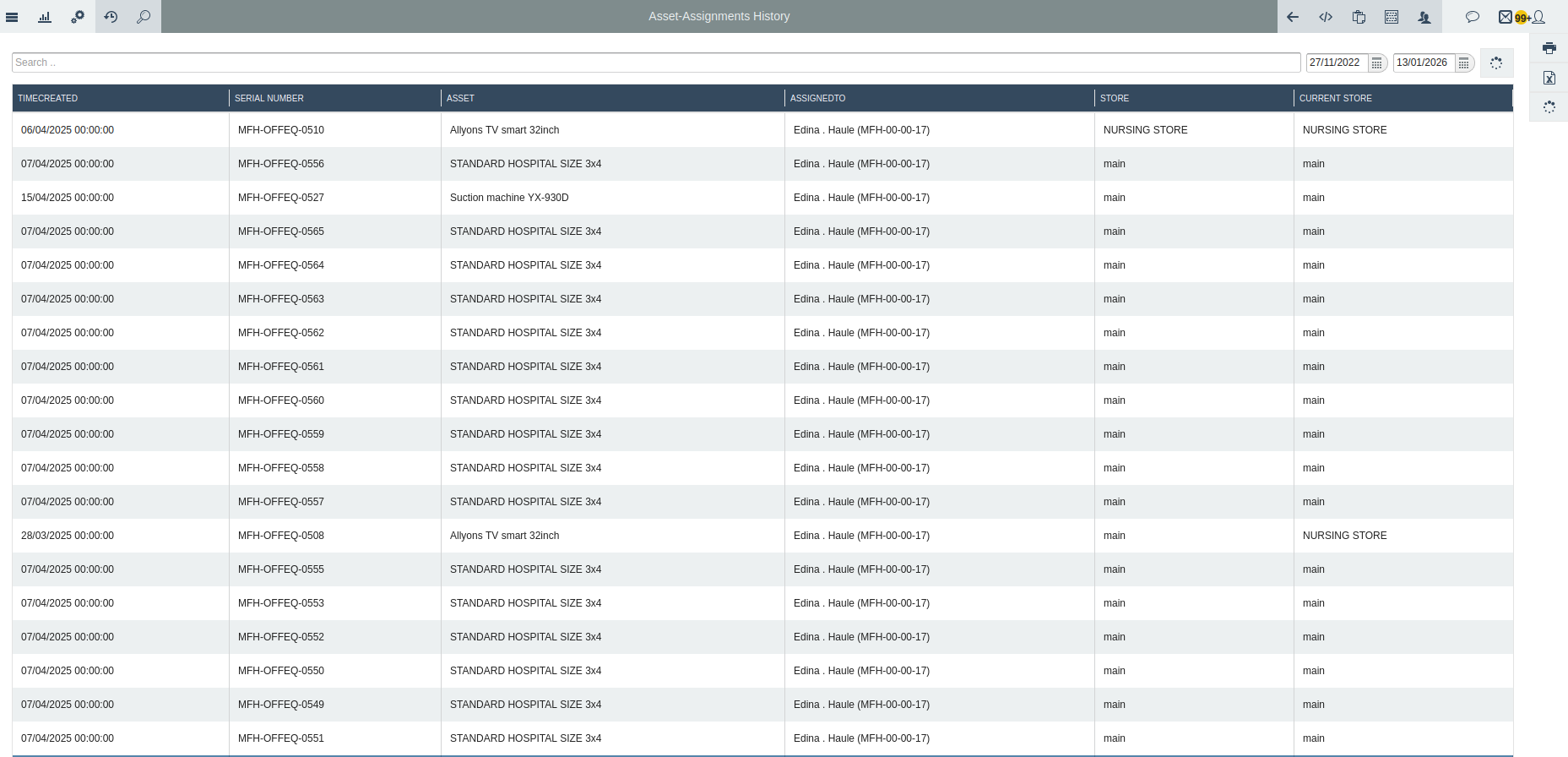
the image shows the list of all asset assignment history
Once you click any of the asset history Inaya will display information such as:
Asset Name The name of the asset.
Current Assigned To The person who is currently using or responsible for the asset.
Assignment History A record showing how the asset has been assigned over time, including:
Asset Name The name of the asset.
Date Assigned The date the asset was given to someone.
Location Where the asset was assigned or used.
Assigned By The person who assigned the asset.
Assigned To The person who received the asset.
Asset Value The value of the asset at the time of assignment.
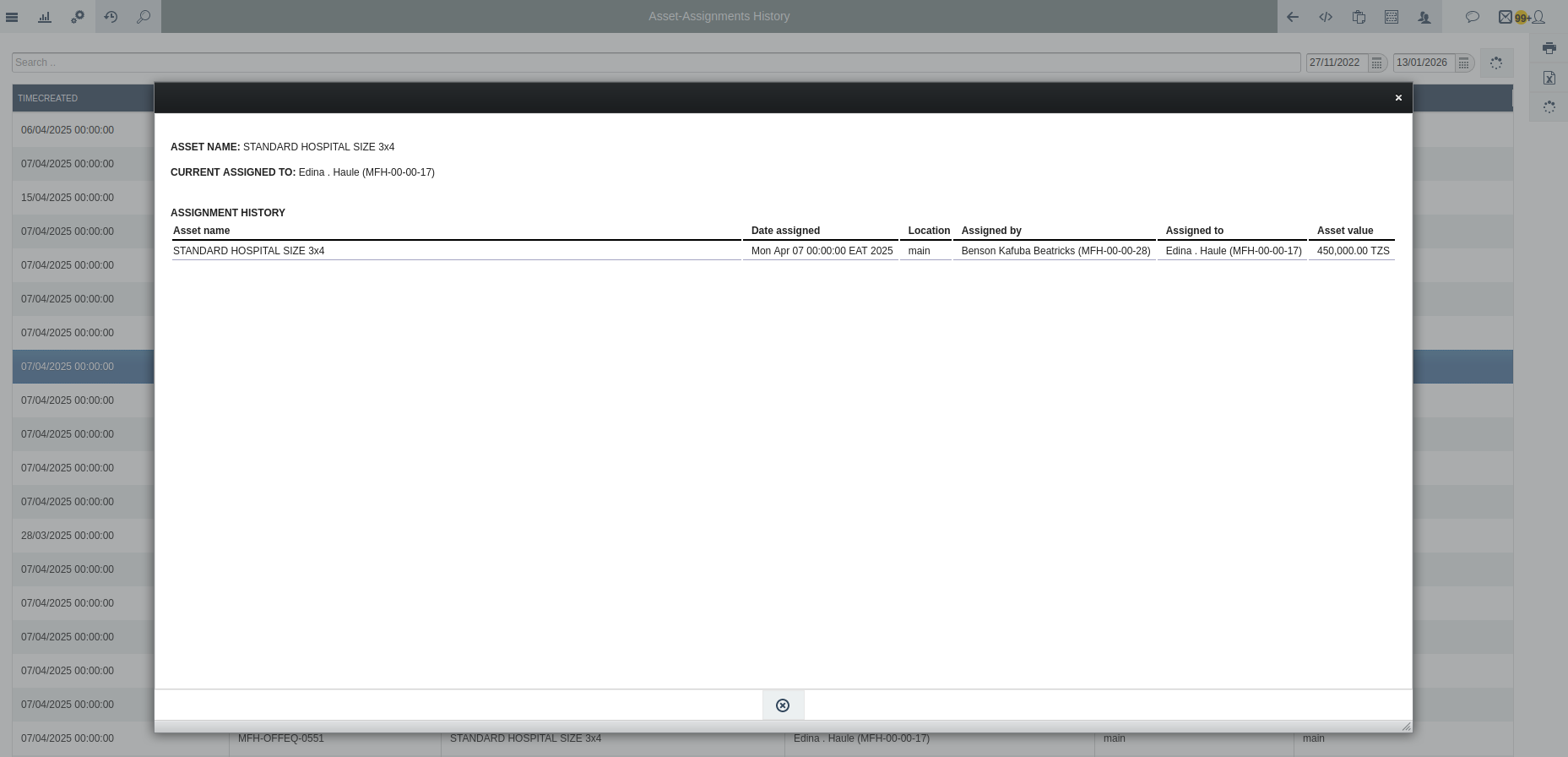
_the images shows all descriptions explained above
2. Fixed Asset Register Report
This report provides a complete list of all fixed assets owned by the organization. It includes key details such as asset name, asset number, category, purchase date, asset value, current condition, and location. The report is mainly used for financial accounting, auditing, and asset management decision-making.
Purchase Date The date when the asset or item was bought.
Item The name or description of the asset.
Serial Number A unique number assigned to the asset for identification.
Current Store The location or store where the asset is currently kept.
Purchase Price The original cost of the asset when it was bought.
Depreciated Amount The total value that has been reduced from the asset over time due to depreciation.
Current Value The remaining value of the asset after subtracting depreciation from the purchase price.
Sold Indicates whether the asset has been sold or not.
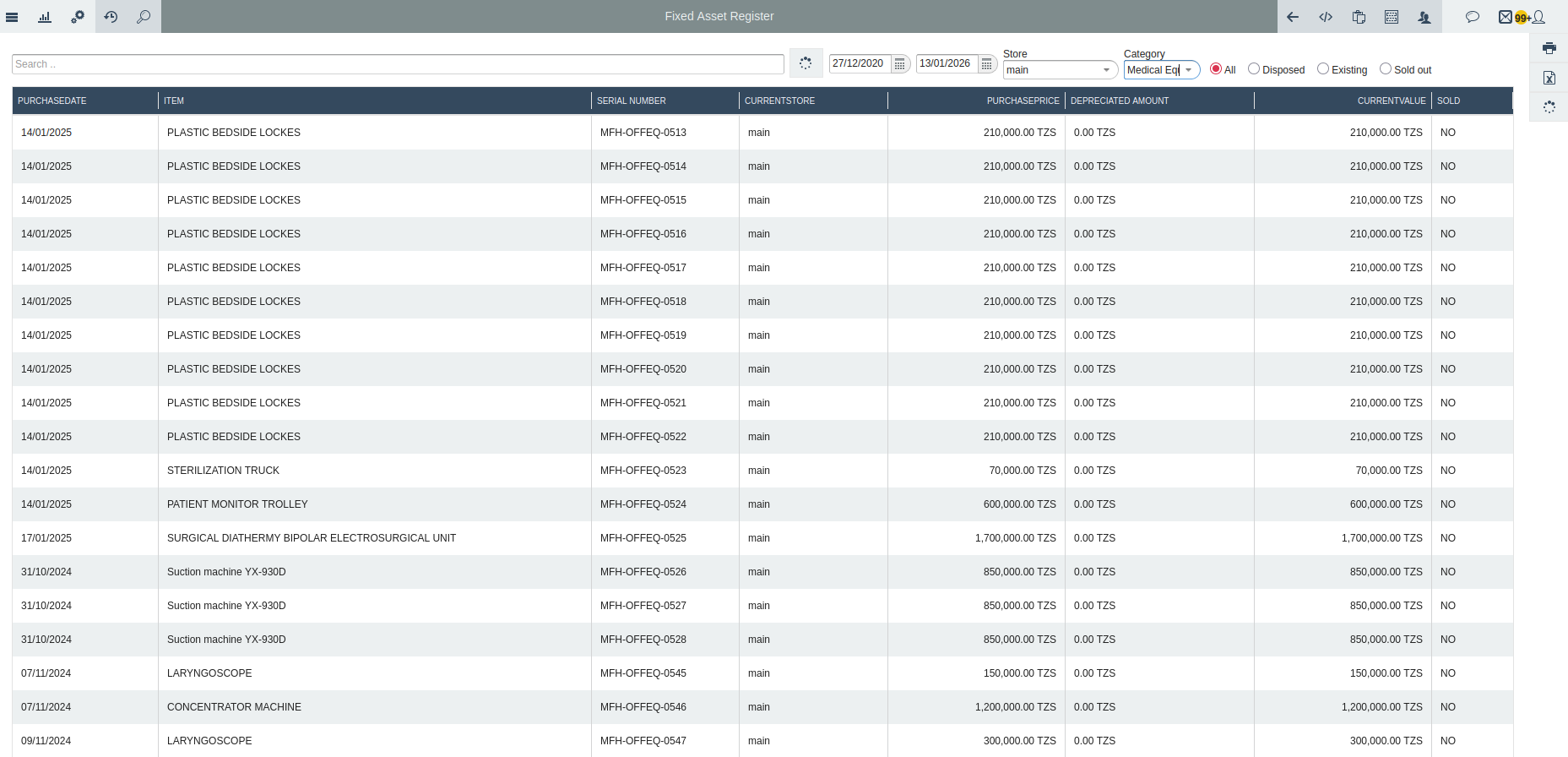
the images shows fixed asset info
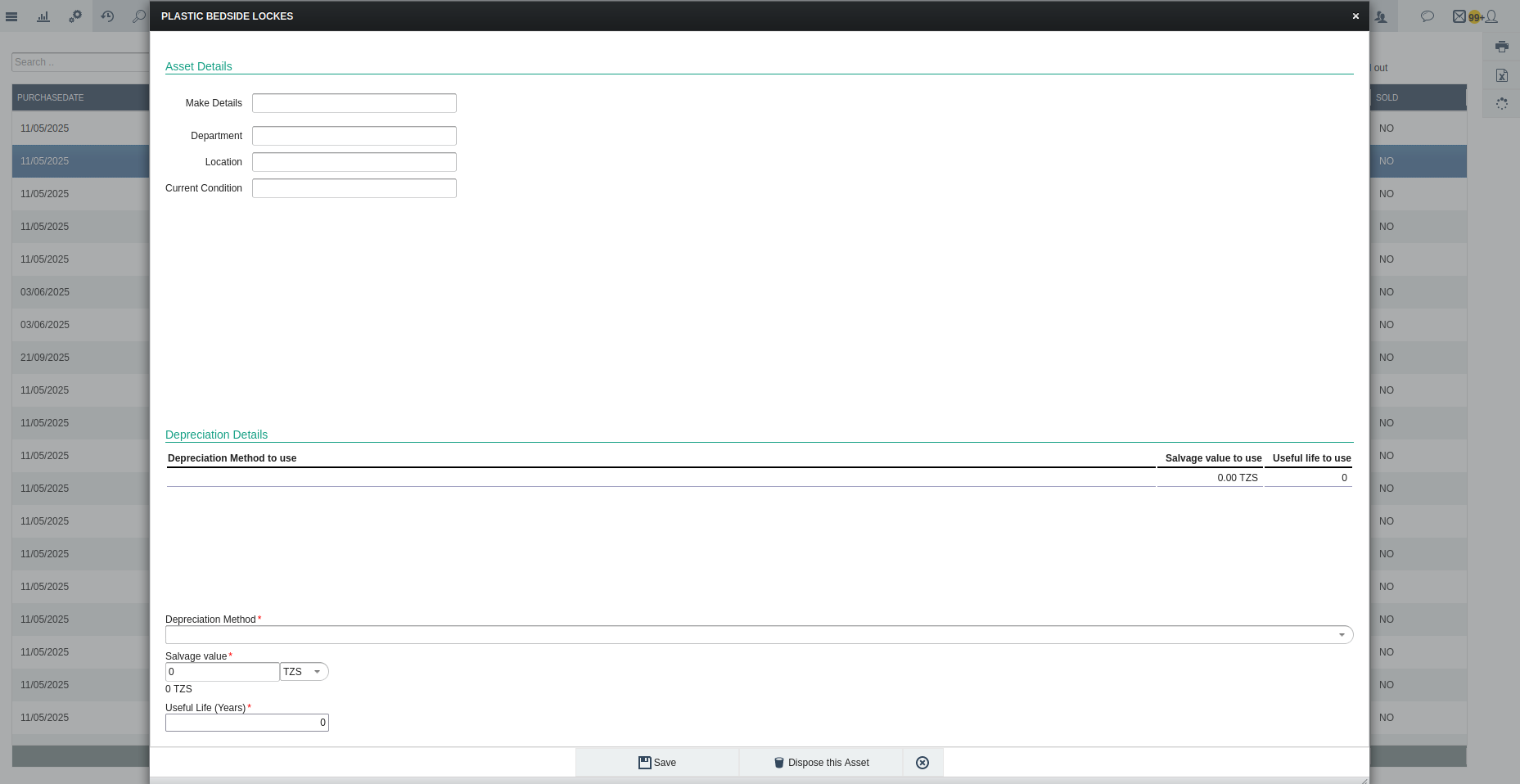
Asset Details Section
Asset Details / Make Details Shows information about the asset, such as its type, brand, or unique name.
Department The department or unit that owns or uses the asset.
Location Where the asset is located or being used (e.g., main store, office, ward).
Current Condition The current state of the asset, such as new, good, worn, or damaged.
Depreciation Details Section Depreciation is the reduction in the value of an asset over time due to use or wear and tear.
Depreciation Method to use The method the system uses to reduce the asset’s value each year. Example:
Straight Line Depreciation The asset loses the same amount of value every year.
Salvage Value to use The value of the asset at the end of its useful life. This is the amount the asset is still worth after many years.
Useful Life to use (Years) The number of years the asset is expected to be used before it becomes very old or loses most of its value.